di Andrea Romanazzi
After discussing the Seal of Pietro d’Abano and his magical pentacle, let’s delve into the grimoire of Pope Honorius and examine a seal contained within it.
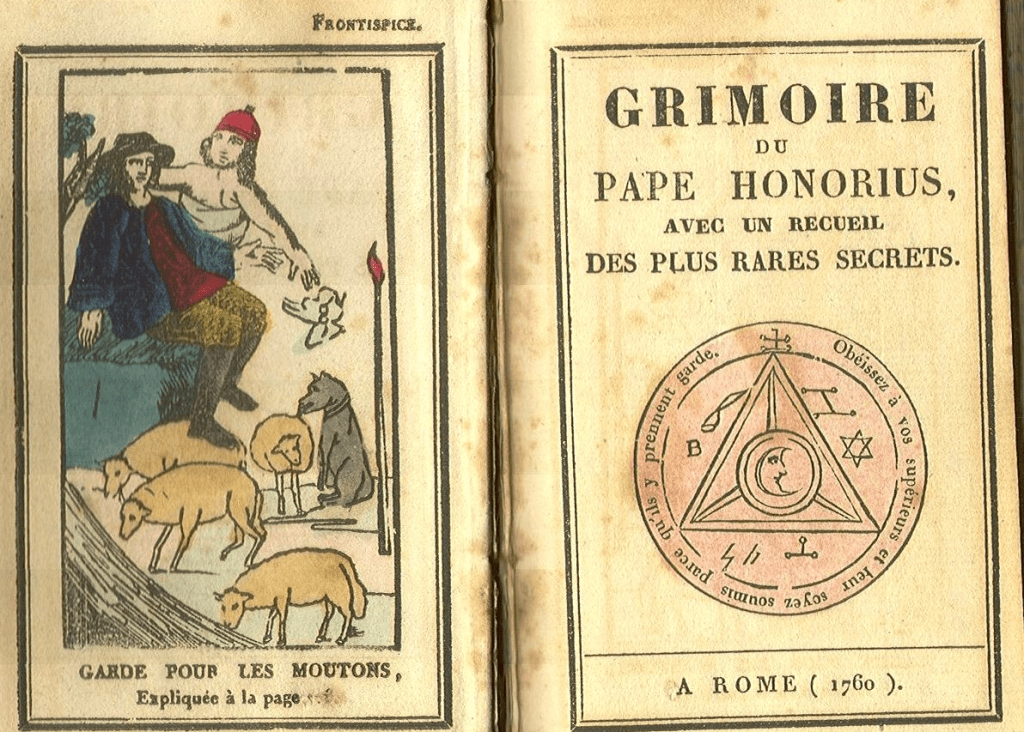
The Grimoire of Pope Honorius
The history of grimoires dates back to the Middle Ages and has persisted through the centuries to the present day, maintaining their mysterious and fascinating aura. These ancient volumes, known as grimoires, contain practical instructions for performing magical ceremonies and enigmatic rituals. The term “grimoire” likely originates from the Old French “gramaire,” which indicated a book of basic instructions. Grimoires are divided into two main categories: Goetia and Theurgy, based on the type of magical operations described. Goetia includes rituals to summon negative and infernal forces, such as demons and evil spirits, while Theurgy involves the evocation of celestial and positive entities, like angels. Among the numerous grimoires, one of the most famous is attributed to a certain “Pope Honorius,” also known as “the Great,” renowned for its content considered particularly blasphemous. The author is believed to be Pope Honorius III, a pontiff who reigned over the Catholic Church from 1216 to 1227. However, there are doubts about the actual attribution of this text to Pope Honorius III, and some scholars believe that the grimoire might have been written by an unknown author who used the pope’s name to lend more authority to the text. Some ancient manuscripts attribute the grimoire to Honorius II, whose dissolute and ambiguous character might be more consistent with the composition of a book of black magic. Honorius II was a contested antipope, known for his audacity, debauchery, and lack of faith, which might have led him to use religion as a tool of power and seek the support of sorcerers and apostates.
Unlike other grimoires, this one shows strong Christian influences, including references to the Bible to affirm the Church’s power to summon and command demons, as indicated in a passage from the Gospel by Christ.
However, this interpretation of papal authority on earth and in the underworld has been criticized by ecclesiastical authorities, as it might reflect a heretical view associating divine power with control over both heaven and hell, contrary to traditional doctrine. This fusion of magic and Christianity makes it unique compared to other similar texts.
The Seal of Pope Honorius
We arrive at the seal. The Grimoire mentions a particular seal known as the “Seal of Pope Honorius.” This seal is described as a complex geometric figure engraved on a metal plate or inscribed on parchment. The Seal of Pope Honorius is said to have magical powers and is used to protect, summon, or control spiritual or demonic entities. However, specific descriptions of the seal may vary slightly between different sources and editions of the grimoire.
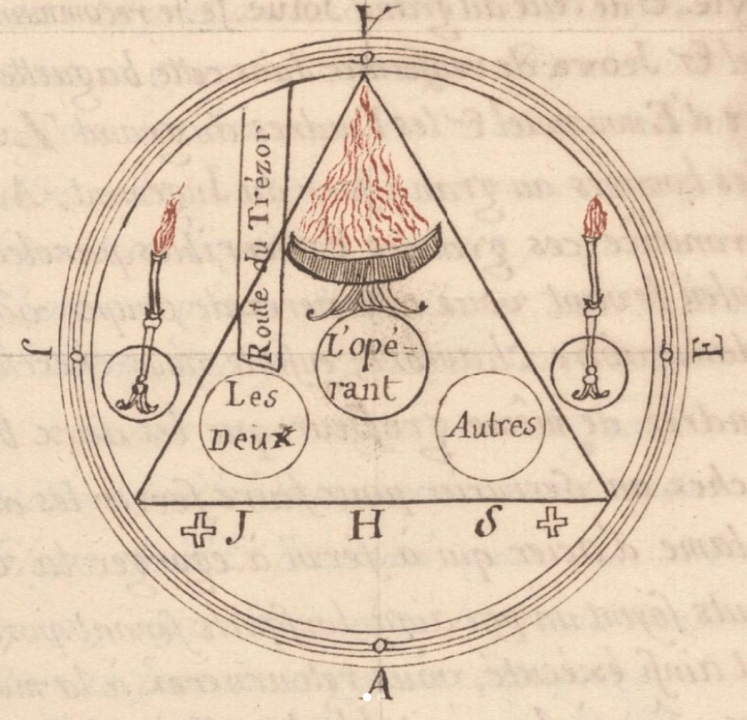
According to occult tradition, the Seal of Pope Honorius is considered a symbol of power and protection. It is primarily used for magical purposes, such as the evocation and control of spiritual or demonic entities, as well as to protect the practitioner from negative or dangerous forces during magical rituals. In particular, the Seal of Pope Honorius is often employed in evocation rituals, where it is believed to act as a means to establish a connection or interaction with the summoned entities. The seal is thought to have the power to concentrate and direct spiritual or magical energies in the desired direction, thus amplifying the effectiveness of the ritual. Besides evocation, the Seal of Pope Honorius can also be used to protect the practitioner from negative influences, to ensure the success of certain magical goals, or to channel beneficial energies during magical practice.
The Triangle of Pacts
It is quite likely that the Seal of Pope Honorius is a reinterpretation of the Triangle of Pacts associated with the work of Heinrich Cornelius Agrippa, a famous scholar, philosopher, and occultist of the 16th century. Agrippa wrote several texts concerning ceremonial magic, including his most famous work, “De Occulta Philosophia” (“Occult Philosophy”), published in 1533. Here, the Triangle of Pacts is described as an integral part of the magic circle used during spirit evocation rituals, a safe and controlled space for interacting with the summoned spirits, protecting the practitioner and the surrounding environment from their potentially dangerous influences.
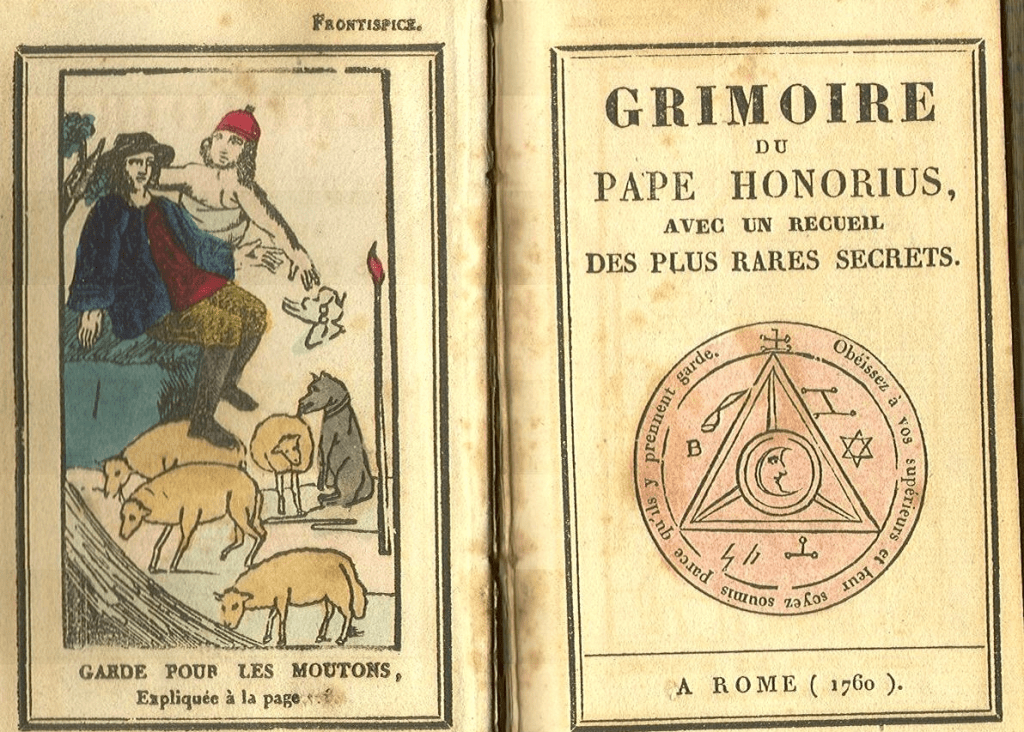
Let’s compare the two seals, with Honorius’ on the left and Agrippa’s on the right.
In the first one, at the center, we find the moon, another expression of the cauldron. In occult tradition and ceremonial magic, the Moon is often associated with femininity, fertility, and the cycles of life. It symbolizes creative and generative power, much like the cauldron.
Outside the triangle, where curious symbols are present, are the assistants, positioned instead within the figure in the Triangle of Pacts.
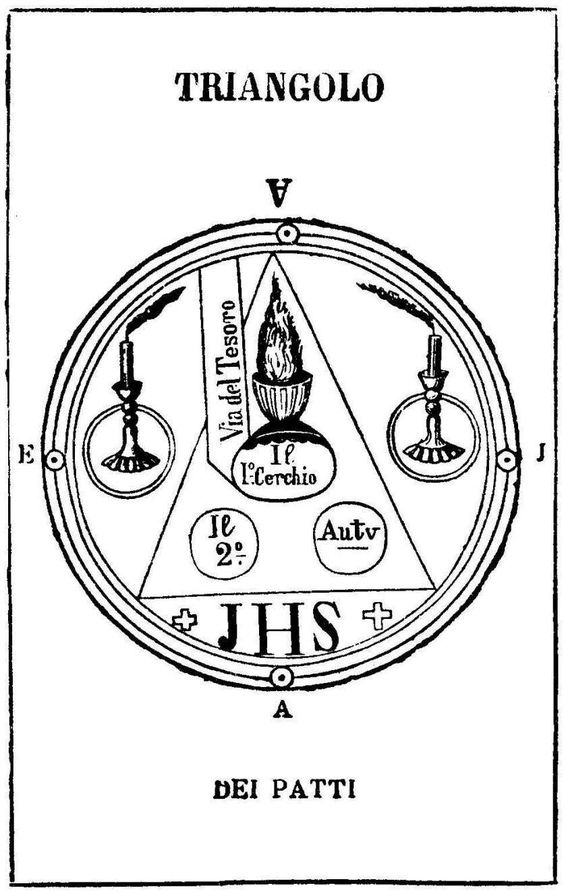
The Star of David is commonly associated with Judaism and the Menorah, the seven-branched lamp that has a long history in Judaism and represents the presence of God in Jewish life, divine wisdom, and spiritual enlightenment. In most religious and spiritual traditions, the east is often considered a sacred direction from which the sun rises and the location of the Temple of Jerusalem. This arrangement expresses the symbol of divine light rising in the east, illuminating the spiritual path and bringing wisdom and revelation, providing protection, clarity, and inspiration. One of the features that we will find in other seals is the knife. The knife, or athame, is often used as a ritual tool in ceremonial magic to cut and separate energies or entities during rituals. It is positioned in the west, associated with the realm of the dead or the world of spirits, the direction towards which the sun sinks into the sky at sunset. The knife is therefore a symbol of protection from the western world.
Finally, there is the way of the treasure. It indicates the flow of magical energy that passes through the Triangle, connecting the practitioner to the summoned spirits and other spiritual realms. This energetic flow might be considered a source of magical power or a way through which the practitioner can obtain spiritual knowledge or resources.


 Centro Studio Misteri Italiani
Lascia un commento