
di Andrea Romanazzi
When the subject of ethics arises, the name of Immanuel Kant almost inevitably comes to mind. The philosopher from Königsberg built one of the most rigorous moral architectures of modernity, grounded in the autonomy of reason and in the categorical imperative: the idea that one must act only according to maxims that can be willed as universal law. It is a vision of strict coherence, deontological in nature, which demands from the individual an unwavering consistency and regards reason as the supreme legislator of action.
And yet, while this system has deeply shaped Western philosophy, its claim to universality remains problematic. It is not possible to imagine a morality valid for all people in every time and place, based solely on reason. Concrete life, relationships, history, and nature itself reveal the complexity and diversity of human action. Ethics cannot be reduced to a rational calculation, nor can one demand that a single model hold true indiscriminately for every individual.
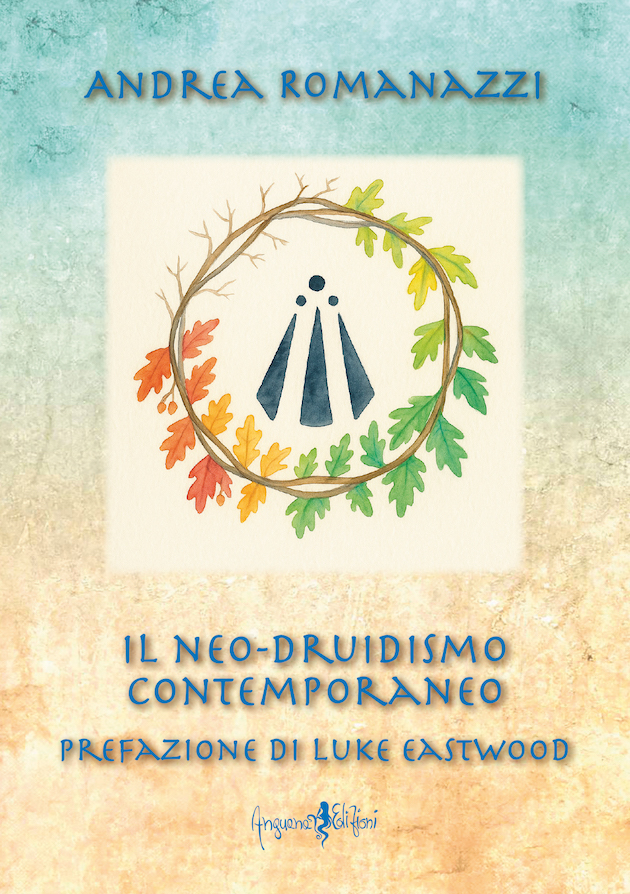
Here the perspective of contemporary Neo-Druidism provides an alternative. As outlined in Il Neo Druidismo Contemporaneo, its ethics does not arise from an abstract universal principle but from the ongoing dialogue with nature, with community, with the cycles of life and the seasons. There is no rigid code to follow; instead, what guides the practitioner is the principle of harmony, sought anew each time in the specific context. Druidic morality is not universal but situated; not abstract but concrete; not rational in the Kantian sense, but rooted in sensitivity, intuition, and relational experience.
This vision does not lead to a chaotic relativism. On the contrary, it shows that ethics is always relational: it depends on one’s relationship with other humans, but also with animals, plants, and landscapes. Kant insisted that only rational beings should be treated as ends in themselves. Druidism, by contrast, extends this dignity to all forms of life and even to cosmic entities. Its ethics is therefore broader, more inclusive, and perhaps better suited to an age confronted with ecological crises and planetary imbalance.
The differences remain profound. Where Kant searched for universal and necessary principles, the druids embrace the plurality of paths, the diversity of contexts, the multiplicity of responses. Where Kant identified reason as the unique guide of moral action, Neo-Druidism entrusts the compass to a balance involving intuition, sensitivity, personal experience, and the listening of the natural world. Where Kant measured moral worth by the intention in accordance with duty, the druids evaluate rather the outcomes of action: whether it generates harmony, strengthens community, and restores balance among the parts involved.
Yet parallels can also be drawn. Kant emphasized the autonomy of the moral subject: law should not come from outside, but from within. Druidism, in its own way, echoes this intuition, though it grounds it not in universal reason but in a broader sense of inner consciousness that unites intellect, feeling, spirituality, and communion with nature. Both refuse the idea of external authority dictating rules; both affirm that morality originates in interiority. The difference lies in how that inner source is understood.
This divergence is not merely theoretical but has practical consequences. A universal morality, such as Kant’s, risks becoming abstract, unable to embrace the variety of real life. A situated morality, like that of Druidism, risks dispersing itself into multiplicity. Yet it is precisely in this tension that a fertile space opens: the recognition that morality cannot be reduced to a single rational model, and that its strength lies in its adaptability, its relational quality, and its capacity to flourish differently across contexts.
Ultimately, Kant bequeaths to us the rigor of reason and the insistence on duty, while Neo-Druidism offers the wisdom of harmony, the attentiveness to the particular, and the respect for all living beings. There is no single, universal morality based solely on reason, as the philosopher of Königsberg believed; instead, there are multiple pathways that, intertwined, teach us that morality is never only law, but always life, relationship, and balance.




 Centro Studio Misteri Italiani
Lascia un commento